The use of generative artificial intelligence (AI) has rapidly become widespread in activities requiring the creation and processing of text, graphics, photographs, audio works, audiovisual content, as well as in advertising personalization, process automation, and data analysis (including scientific data). As a result, tasks in advertising campaigns—such as creating social media materials, product descriptions and labeling, data analysis, or customer service—can be performed faster and more easily. There is no doubt that AI is a powerful tool for cost optimization. At the same time, one must not overlook the risks associated with the use of AI tools—particularly in the hands of an unaware user (and subsequent users of AI-generated content), where these risks may increase. This is especially important for the dietary supplements industry, which in Poland is one of the most dynamic yet also one of the most heavily regulated sectors. In this industry, AI therefore represents not only a time-saving solution, but also a new compliance challenge.
Z przyjemnością informujemy o zakończeniu złożonego postępowania prowadzonego przez naszą Kancelarię w formule pro bono. Sprawa dotyczyła grupy klientów, którym ubezpieczyciel odmówił wypłaty świadczeń po zdarzeniu losowym uniemożliwiającym realizację planów wyjazdowych na kilka godzin przez rozpoczęciem.
Pomyślny finał sporu zaowocował nie tylko odzyskaniem pełnej kwoty roszczeń, ale stanowi również istotny wkład w dyskusję nad rzetelnym traktowaniem konsumenta. Rozstrzygnięcie to podkreśla, że zapisy umowne muszą być przejrzyste, a deklarowana ochrona ubezpieczeniowa powinna mieć charakter realny, zwłaszcza w sytuacjach kryzysowych, gdyż właśnie temu powinna służyć.
Last weekend, **Attorney Joanna Uchańska**, partner at AJ LAW, delivered a specialized lecture at the **Faculty of Law and Administration of Jagiellonian University**, dedicated to one of the most demanding and rapidly evolving regulatory areas: **advertising in sensitive industries**, particularly the advertising of medicinal products, dietary supplements, and medical devices.
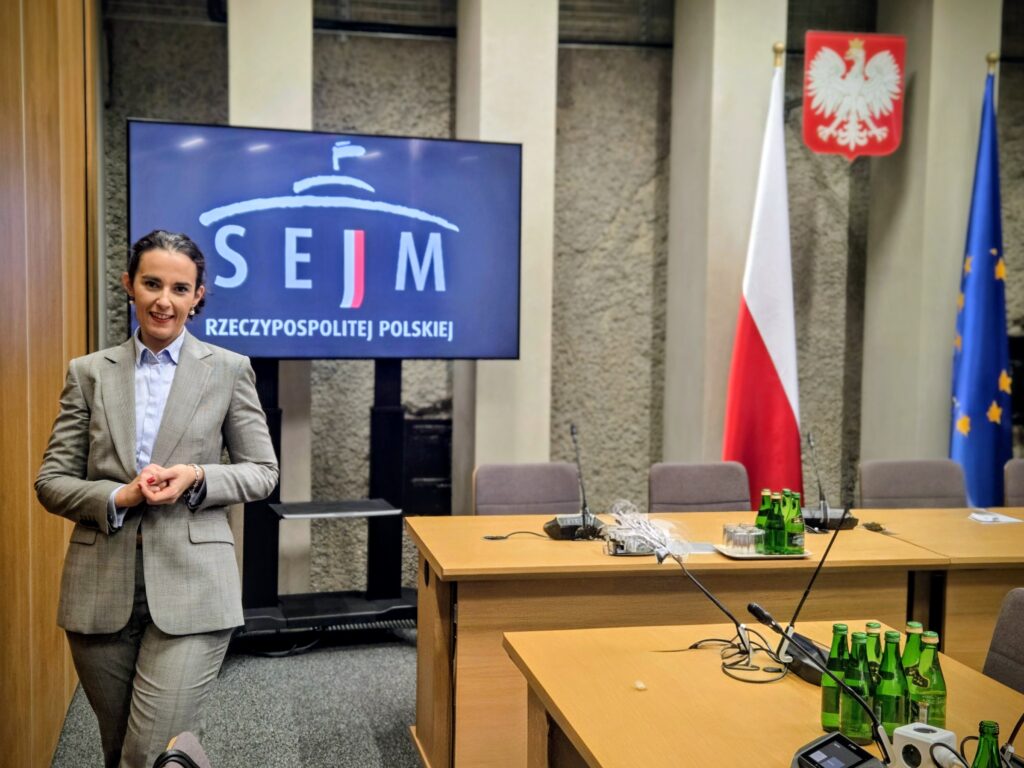
On December 3, 2025, the Polish Parliament hosted the third meeting of the **Parliamentary Team for Functional Food and Nutrition**, focused on regulatory issues related to the process of introducing products to the market and the practical application of administrative regulations in the operations of innovative businesses.
The meeting gathered numerous experts, representatives of public administration, and industry leaders. One of the key highlights was the presentation by **Attorney Joanna Uchańska**, partner at AJ LAW, who delivered the second part of her original study titled:
**“Market Introduction – The Code of Administrative Procedure as a Tool for Protection or an Opportunity for Innovation.”**
The meeting gathered numerous experts, representatives of public administration, and industry leaders. One of the key highlights was the presentation by **Attorney Joanna Uchańska**, partner at AJ LAW, who delivered the second part of her original study titled:
**“Market Introduction – The Code of Administrative Procedure as a Tool for Protection or an Opportunity for Innovation.”**
On November 25–27, 2025, the **World Pharmaceutical Industry Congress** took place at the Warszawianka Hotel in Jachranka — one of the most important industry events in Poland, bringing together market leaders, experts, and representatives of public institutions — over 600 participants.
This year’s edition was a spectacular success, becoming a space for exchanging knowledge, inspiration, and discussions on strategic directions for the development of the pharmaceutical and supplement sectors.
The development of artificial intelligence brings not only innovation but also new threats. One of the most controversial and alarming phenomena of recent years is deepfake technology — a tool that enables the creation of realistic yet completely fabricated audio and video materials. Although the technology itself can be used for artistic or educational purposes, its potential for abuse is enormous. The use of a person’s image without consent, identity theft, blackmail, or defamation are just some of the possible consequences.
Today, October 24, 2025, the European Commission concluded the public consultation on the draft Digital Fairness Act (DFA), which aims to adapt consumer law to the challenges of the digital world. The proposal seeks to strengthen consumer protection—particularly for minors—in the digital environment and to ensure fair competition for businesses operating within the European Union’s single market.
A year ago, AJ LAW was founded – a law firm born out of the need to create a place where the law genuinely supports business and our clients’ everyday decisions. From the very beginning, we have been guided by the idea of combining high-quality legal services with a partnership-based approach to cooperation. We believe that the law should not be a barrier but a tool that enables growth, protects interests, and supports the strategic goals of both businesses and individuals.
In the latest issue of the magazine Świat Przemysłu Farmaceutycznego (No. 3/2023), an article titled “Packaging of Dietary Supplements and FSMP – Labels, Claims and Beyond – Law, Practice, Challenges” was published, in which attorney Joanna Uchańska provides a comprehensive overview of the legal aspects related to the packaging of dietary supplements and foods for special medical purposes (FSMP).
On October 9, 2025, at the Polish Baltic Philharmonic in Gdańsk, the first edition of the Remedy NutraFood CDMO Conference will take place – an event that aims to become the central meeting point for the nutraceutical and CDMO industry in Europe.